July 26, 2026
Why Do Luxury Perfumes Last So Much Longer?
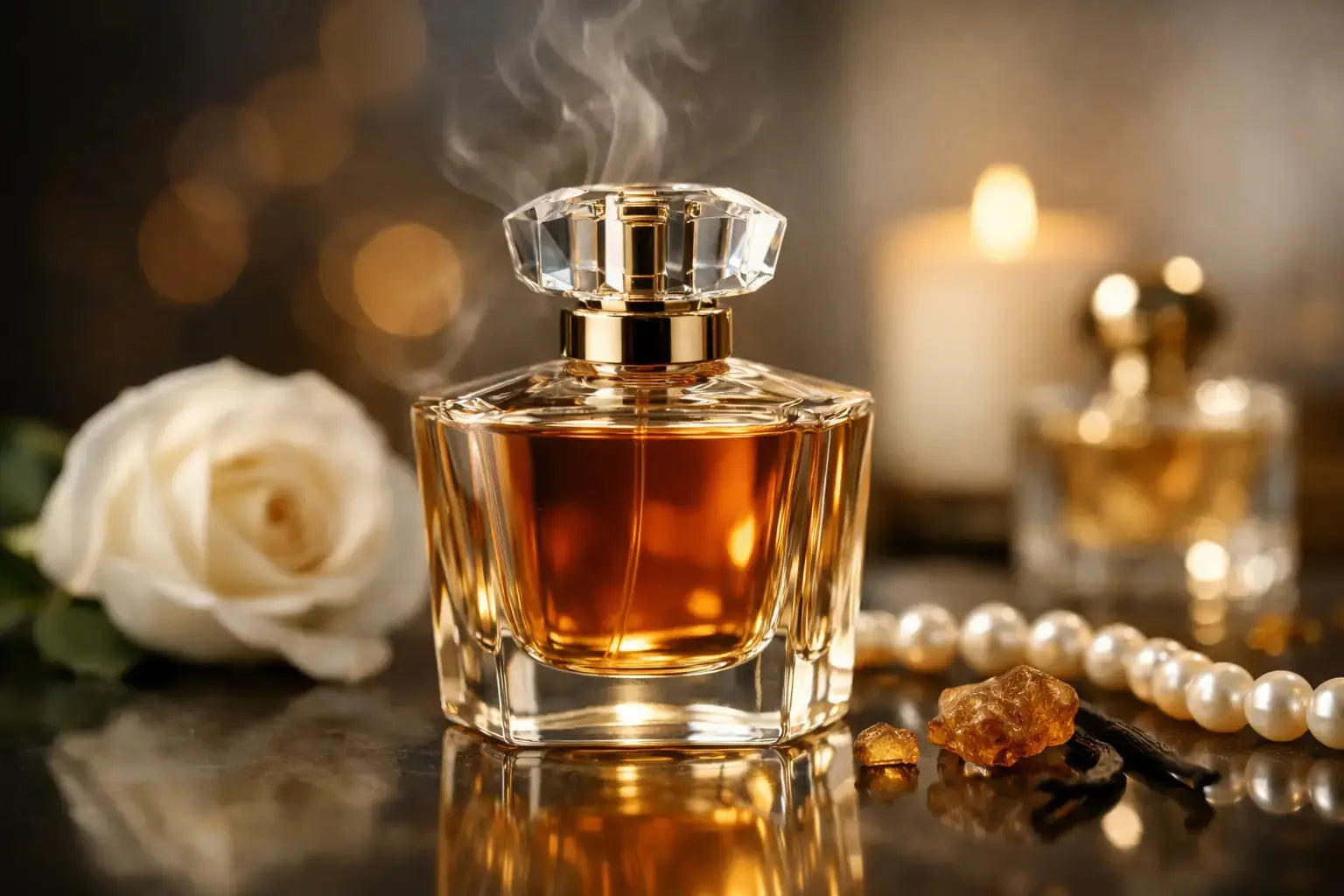
A fragrance can feel magnificent at first spray, then disappear before lunch. Others remain close to the skin through an evening gathering, warming into amber, woods, and soft musk long after the first bright notes have settled. So, why do luxury perfumes last? The answer is not simply a higher price. It is the careful relationship between formula, materials, concentration, craftsmanship, and the way a scent is designed to unfold over time.
For a fragrance house shaped by Arabian perfumery, longevity is more than a technical promise. It is part of the experience. A lasting scent leaves a quiet trace on a collar, a memory in a room, and a signature that feels entirely your own.
Why Do Luxury Perfumes Last Longer?
Luxury perfume often lasts longer because it is built with greater depth. Rather than relying on a brief flash of fresh top notes, a well-made fragrance is structured around materials that hold their presence: resins, woods, balsams, musks, vanilla, amber accords, and rich floral absolutes. These notes evaporate more slowly than light citrus, watery, or airy ingredients.
Think of a perfume as a composition with different tempos. Bergamot may sparkle in the opening, but oud can remain for hours. A bright fruit note may make an introduction, while amber and musk create the warm, sensual finish. Luxury formulas are often designed so these slower-moving base notes carry the fragrance gracefully through the day.
This does not mean every expensive perfume should be loud. Some are intentionally intimate, made to be discovered at close range rather than announced across a room. Longevity and projection are different qualities. A perfume may last eight hours on skin while becoming a soft, elegant skin scent after the first two. True luxury is often found in that control.
Concentration Changes the Wearing Experience
One of the clearest reasons premium perfumes perform well is fragrance concentration. Perfume is a blend of aromatic materials and alcohol, sometimes with a small amount of water or other stabilizing elements. The proportion of fragrance oil affects how full and enduring the composition can feel.
Eau de Toilette is generally lighter and often suited to a shorter, fresher wear. Eau de Parfum typically contains a higher level of aromatic concentrate, giving the scent more presence and a longer dry-down. Parfum or extrait may be richer still, though a higher concentration does not automatically guarantee a more forceful scent. It can create a smoother, closer, more luxurious trail instead.
The important detail is balance. Too much oil in the wrong formula can make a fragrance feel dense or flat. Too little can leave beautiful notes without enough foundation. Skilled perfumery gives each material room to speak, then ensures the composition has the structure to endure.
The Materials Matter as Much as the Percentage
A high concentration alone cannot turn a simple formula into a memorable perfume. The character and quality of the materials are equally important. Fine natural extracts and carefully composed accords tend to offer more dimension, which means the scent changes with warmth, movement, and time rather than fading in one straight line.
Arabian-inspired perfumery has long understood the power of enduring materials. Oud brings dark, woody depth. Amber creates a resinous glow. Musk lends softness and persistence. Vanilla can add warmth without losing sophistication when balanced with spice, woods, or smoke. These are not merely rich notes. They are anchors.
Certain materials also help bind a formula together. Perfumers use fixatives, including woods, musks, resins, and modern aroma molecules, to slow evaporation and extend the life of more delicate notes. The result should not feel heavy for the sake of it. It should feel complete, as if every phase of the fragrance belongs to the same story.
At Qanzari, this sensibility is rooted in the desert's most enduring treasures: warm amber, polished woods, deep oud, and sensual musk made for a confident, lasting impression.
Time, Maceration, and the Art of Composition
Luxury fragrance is rarely about combining impressive ingredients and bottling them immediately. After a formula is blended, it may need time to rest. During maceration, the materials settle together, sharp edges soften, and the composition becomes more harmonious.
This period can influence how polished a perfume feels on the skin. A scent with a rounded opening, a clear heart, and a lingering base has usually been considered as a complete journey. The goal is not to make every note last forever. It is to allow each stage to arrive at the right moment.
The opening is often the most volatile, especially in citrus, herbs, and fresh spices. The heart develops once the first brightness fades, revealing florals, incense, saffron, or aromatic woods. Finally, the base remains: the amber, vanilla, musk, patchouli, sandalwood, or oud that gives the fragrance its memory. A thoughtfully built perfume makes this transition feel natural rather than abrupt.
Your Skin Has the Final Say
The same luxury perfume can wear differently on two people. Skin temperature, hydration, natural oils, climate, diet, and even body chemistry can influence how quickly a scent develops and how long it remains noticeable.
Dry skin tends to absorb fragrance more quickly, which can make even a richly composed perfume seem shorter-lived. Applying an unscented moisturizer before spraying can help create a better surface for fragrance. Pulse points such as the wrists, neck, and inside elbows offer warmth, but clothing can preserve perfume even longer because fabric does not absorb oils in the same way skin does.
In warm climates, fragrance becomes more active. Heat can amplify projection and bring out sweet, resinous, and woody notes with remarkable beauty. Yet extreme heat can also make a heavy perfume feel overwhelming if it is overapplied. One or two deliberate sprays may create a more refined result than a cloud of fragrance. Let the perfume meet the air gradually.
Humidity also plays a role. In humid conditions, scent can stay present in the air, while dry, air-conditioned environments may make it feel quieter. This is why fragrances built around oud, amber, musk, and vanilla are especially admired across the Gulf: they have the depth to retain their character when the climate asks more of them.
How to Make a Fine Perfume Last Its Best
Even the finest perfume benefits from thoughtful application. Apply it to clean, moisturized skin, ideally after a shower when the skin is not completely dry. Spray from a short distance and let it settle. Rubbing your wrists together is tempting, but it can disturb the opening and make the top notes disappear faster.
For a more lasting impression, mist fragrance lightly over clothing from a safe distance. Test delicate fabrics first, since some perfume oils can mark silk or pale materials. Hair can also hold scent beautifully, though direct, frequent spraying may be drying. A gentle mist into the air, then walking through it, is often enough.
Storage matters as well. Keep your bottle away from direct sun, heat, and humidity. A bathroom shelf may be convenient, but changing temperatures can slowly affect the fragrance. A cool, dark drawer or cabinet protects the richness you chose.
Lasting Does Not Always Mean Better
There is a temptation to judge every perfume by how many hours it can dominate a room. But the finest fragrance wardrobes include different kinds of presence. A crisp daytime scent may be designed for four polished hours. A smoky oud for evening may stay on a jacket until the next day. Both can be luxurious when they perform as intended.
The better question is whether the scent still feels beautiful as it wears. Does it retain its character after the opening? Does the dry-down feel warm, clean, sensual, or distinguished rather than thin and generic? A fragrance that becomes more compelling after several hours offers a rare kind of value: it gives you more of its story, not simply more volume.
Choose perfume the way you choose a personal signature. Look for materials that speak to your style, a concentration that suits your routine, and a dry-down you want to revisit. When amber, oud, musk, or vanilla remains softly on the skin at the end of the day, it is not only proof of performance. It is the final, elegant note of your presence.